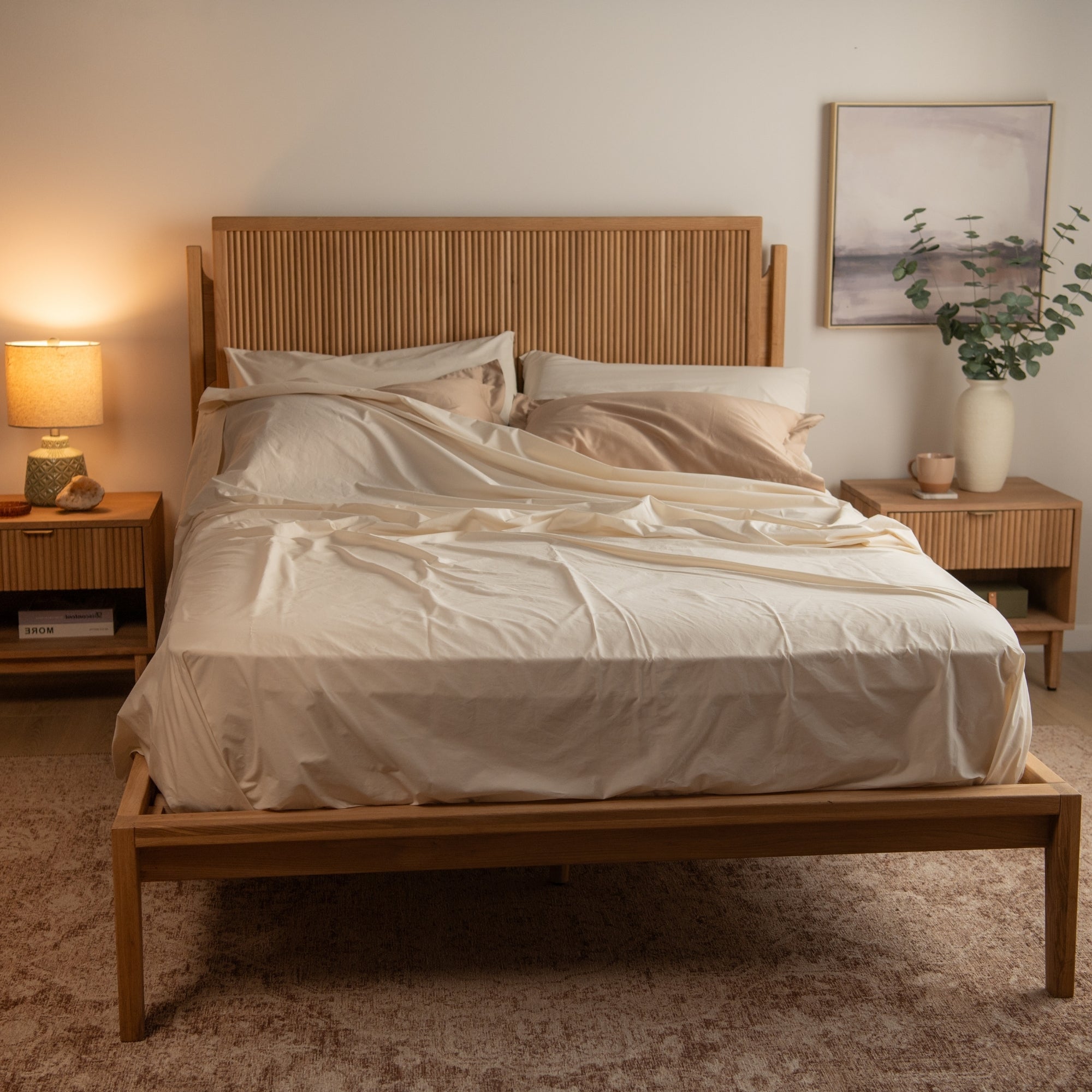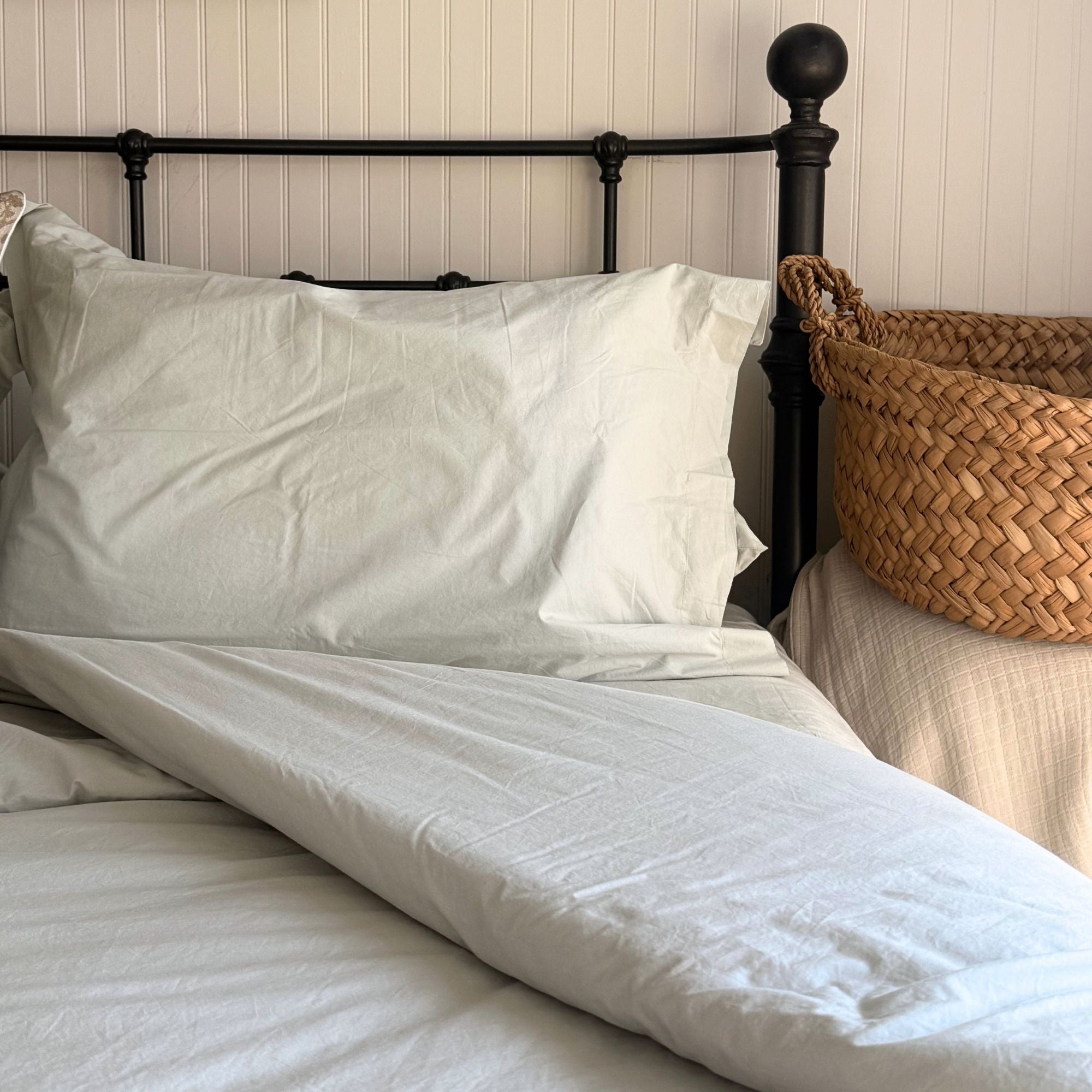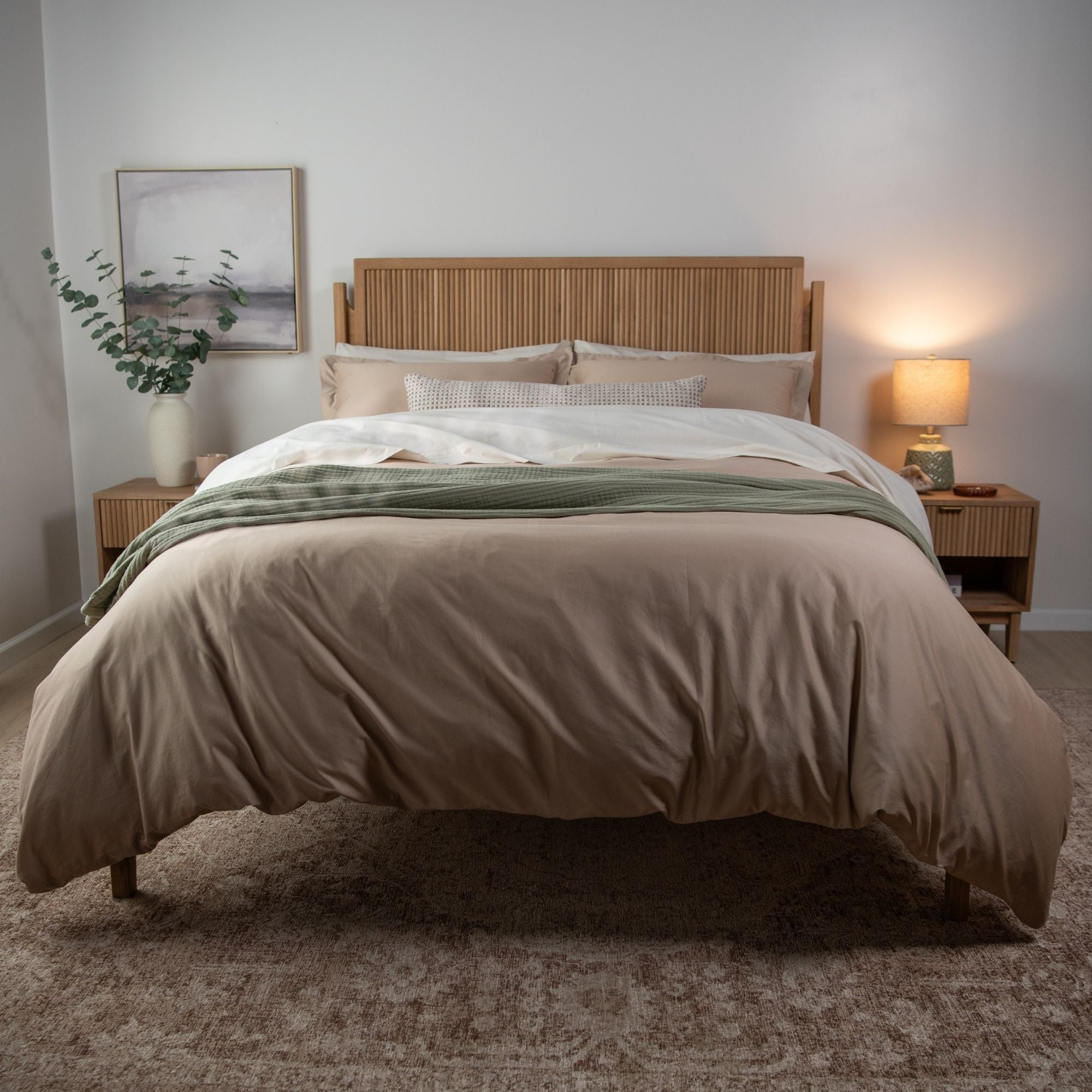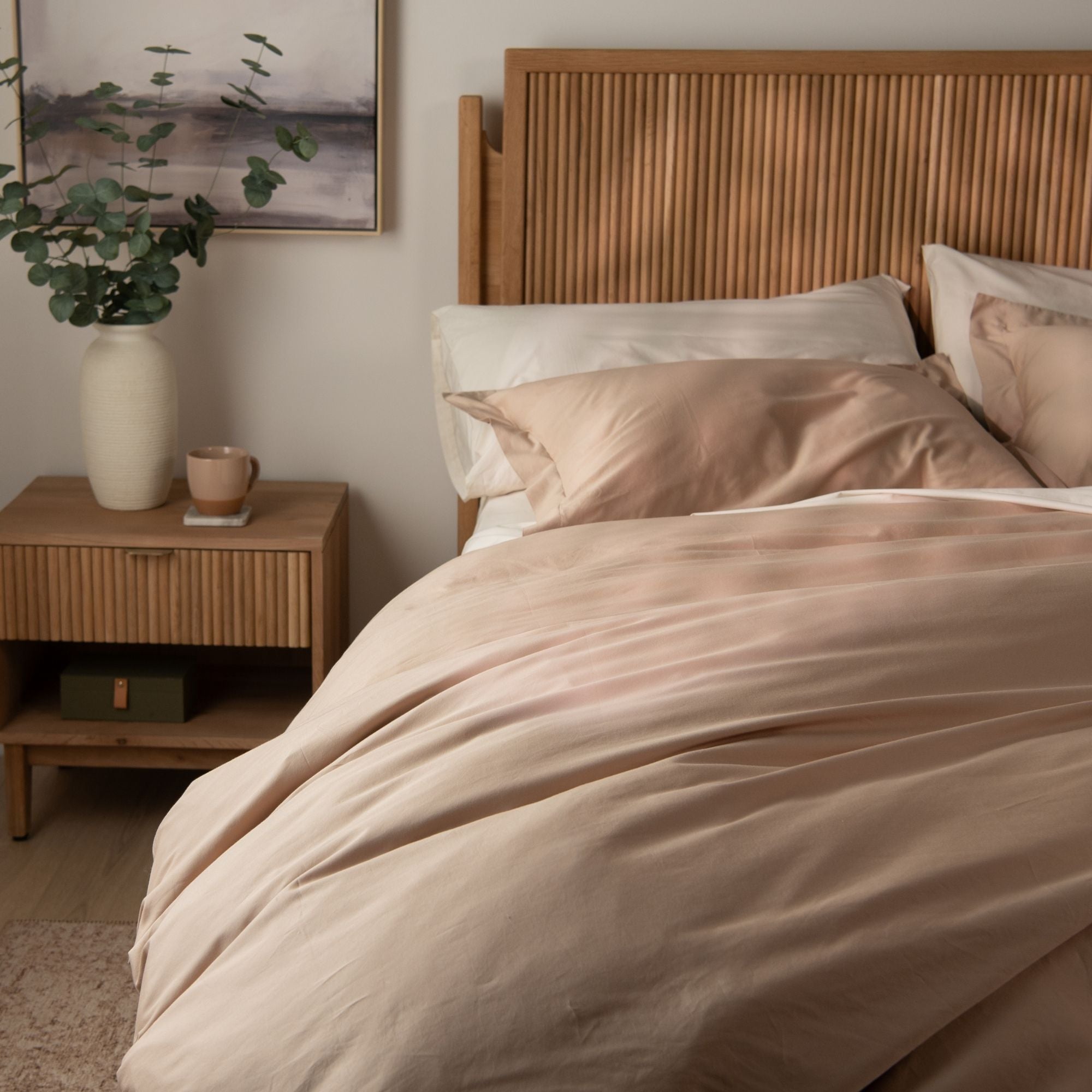
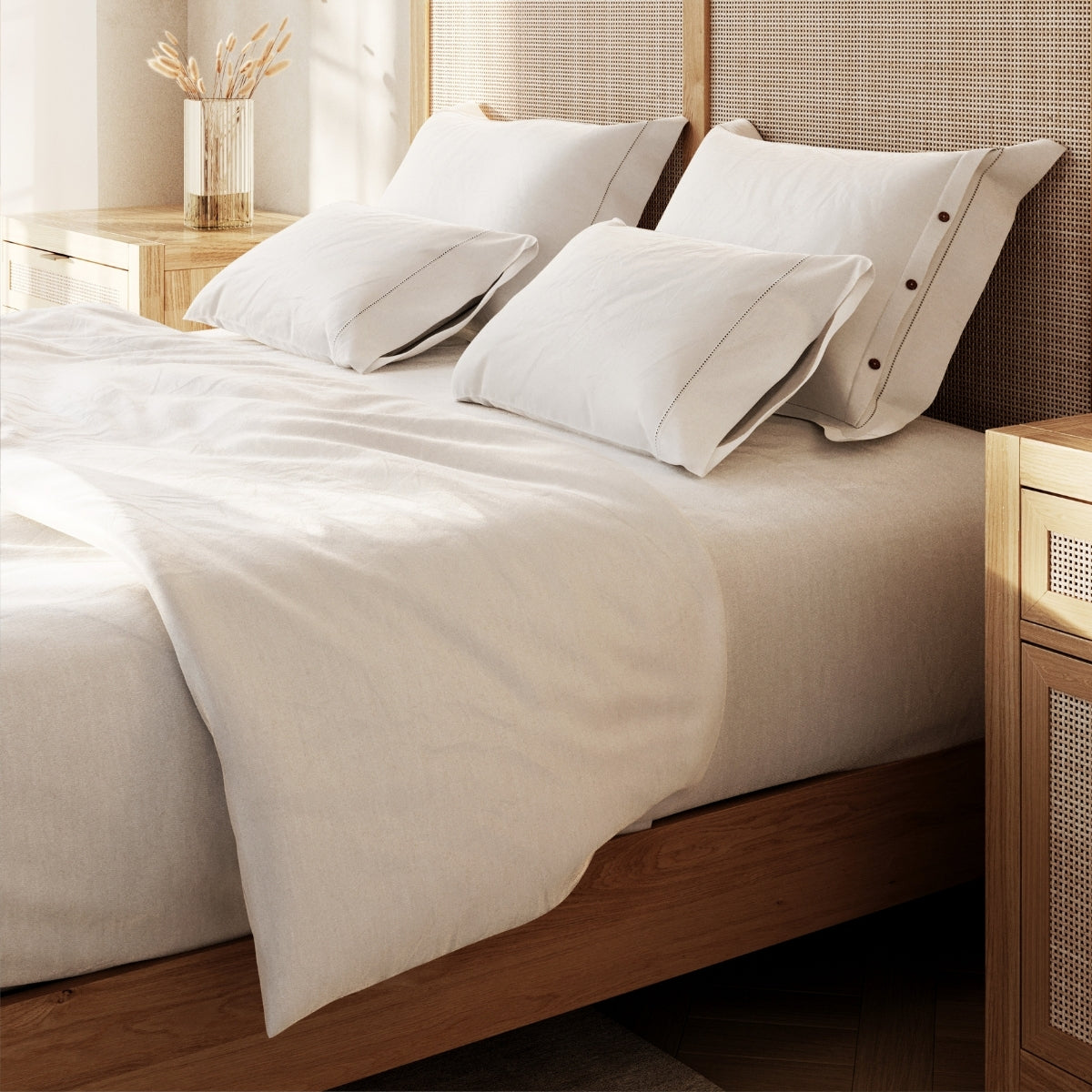

Choosing the right sheets can make all the difference in how you sleep, and, at Naturepedic, we know that every detail matters.
If you're a serious bedding shopper, you've probably heard of percale and sateen. These popular fabric types offer distinct feels and benefits — but when it comes to percale vs sateen, which is right for you? Let’s delve into the characteristics, benefits, and considerations of each to help you make an informed decision.
Percale vs Sateen Sheets: Key Points
- Percale and sateen are both cotton weaves, but they feel very different.
- Percale sheets have a crisp, cool, matte feel that’s great for hot sleepers or warmer climates.
- Sateen sheets have a silky, smooth feel, making them a cozy choice for sleepers who prefer softness and warmth.
- The best choice depends on how you like your sheets to feel, but certified organic cotton is always a smart place to start.
Note: This blog may contain links to Naturepedic products and promotional content where relevant to the topic discussed.
Percale vs Sateen Sheets: The Basics
Understanding the fundamental differences when comparing percale vs sateen sheets is essential for bedding shopping. Both are types of weaves commonly used in making bed sheets, but they offer distinct textures and sleeping experiences. Here's a graphic to illustrate the two weave patterns:

Let's break down the key differences.
What Is Percale?
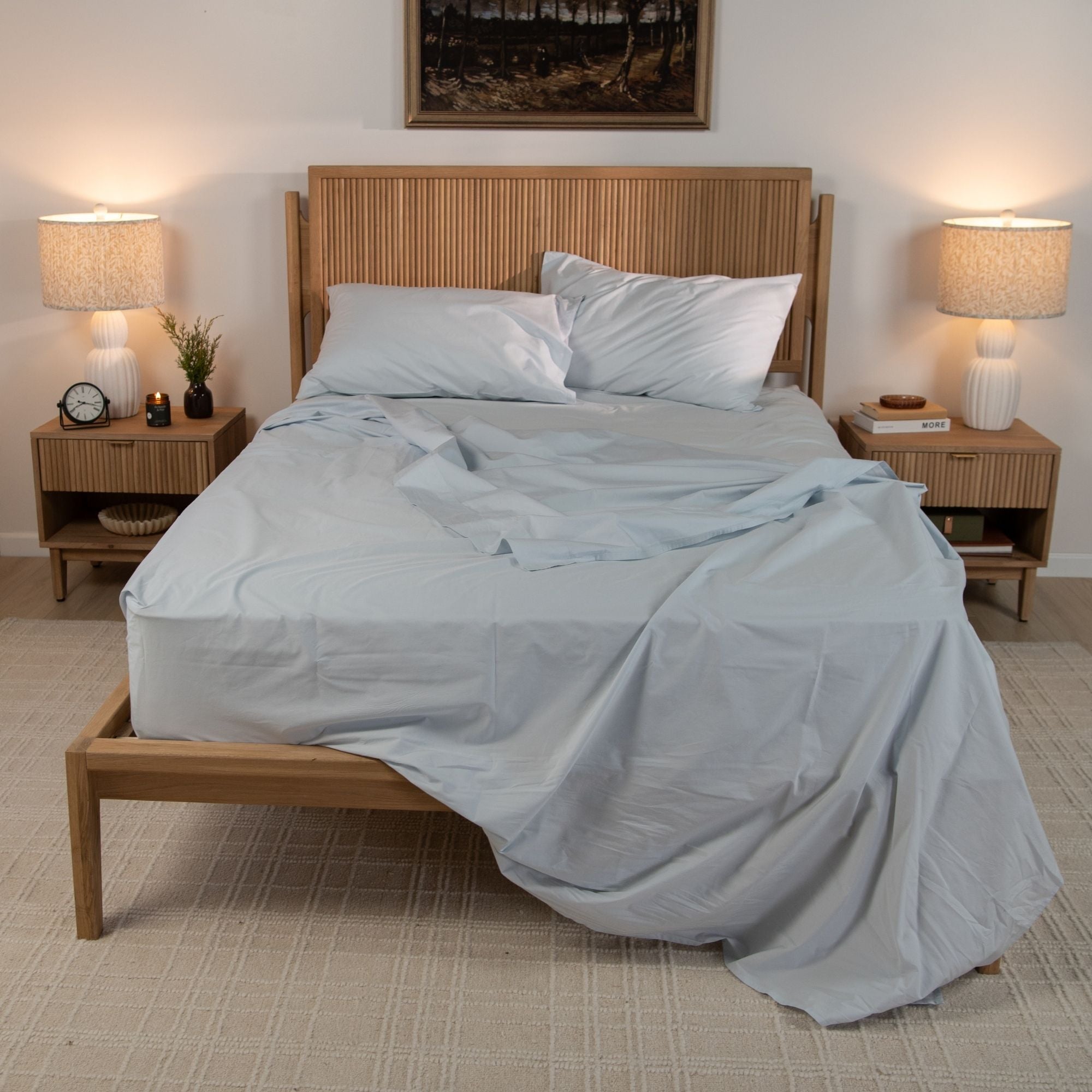
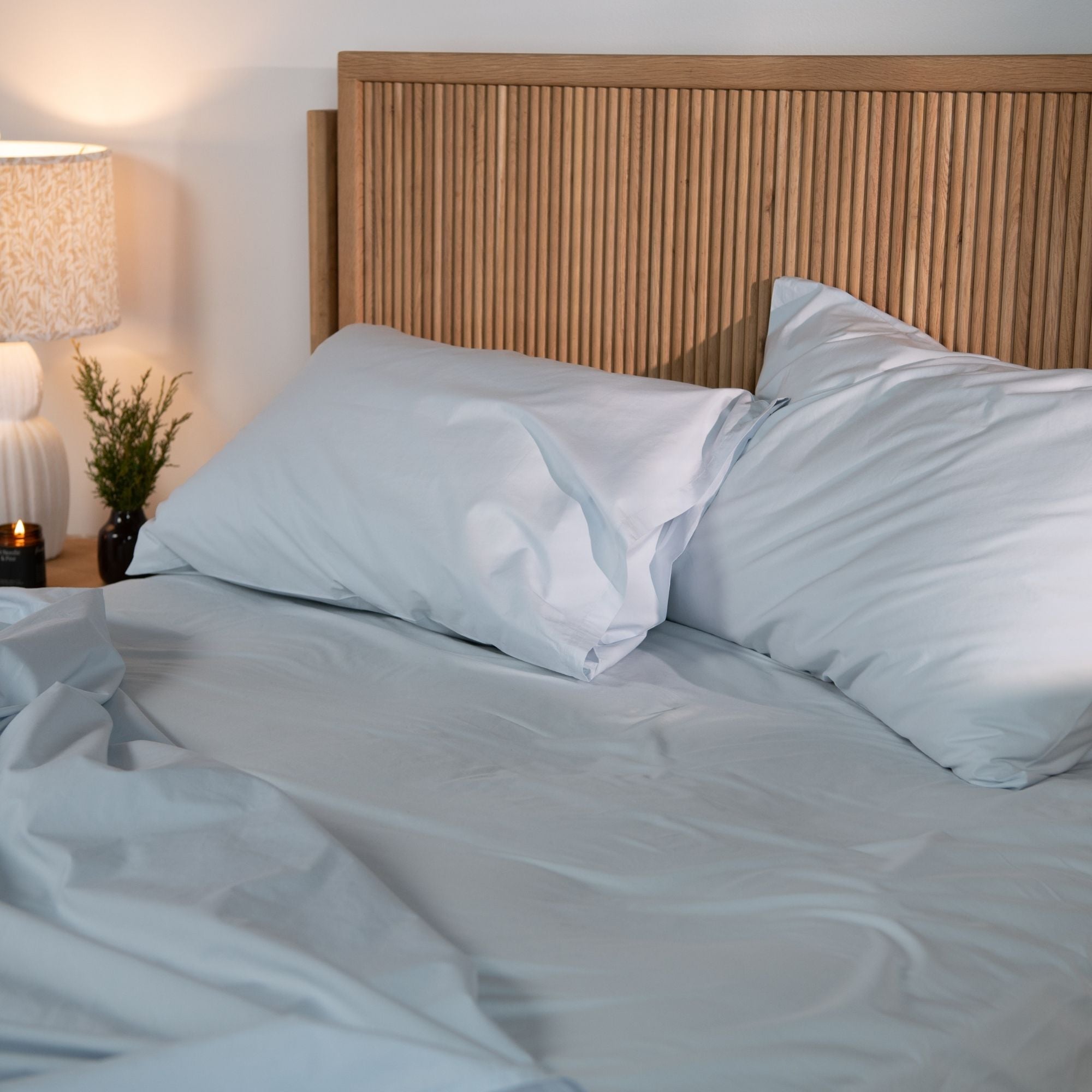
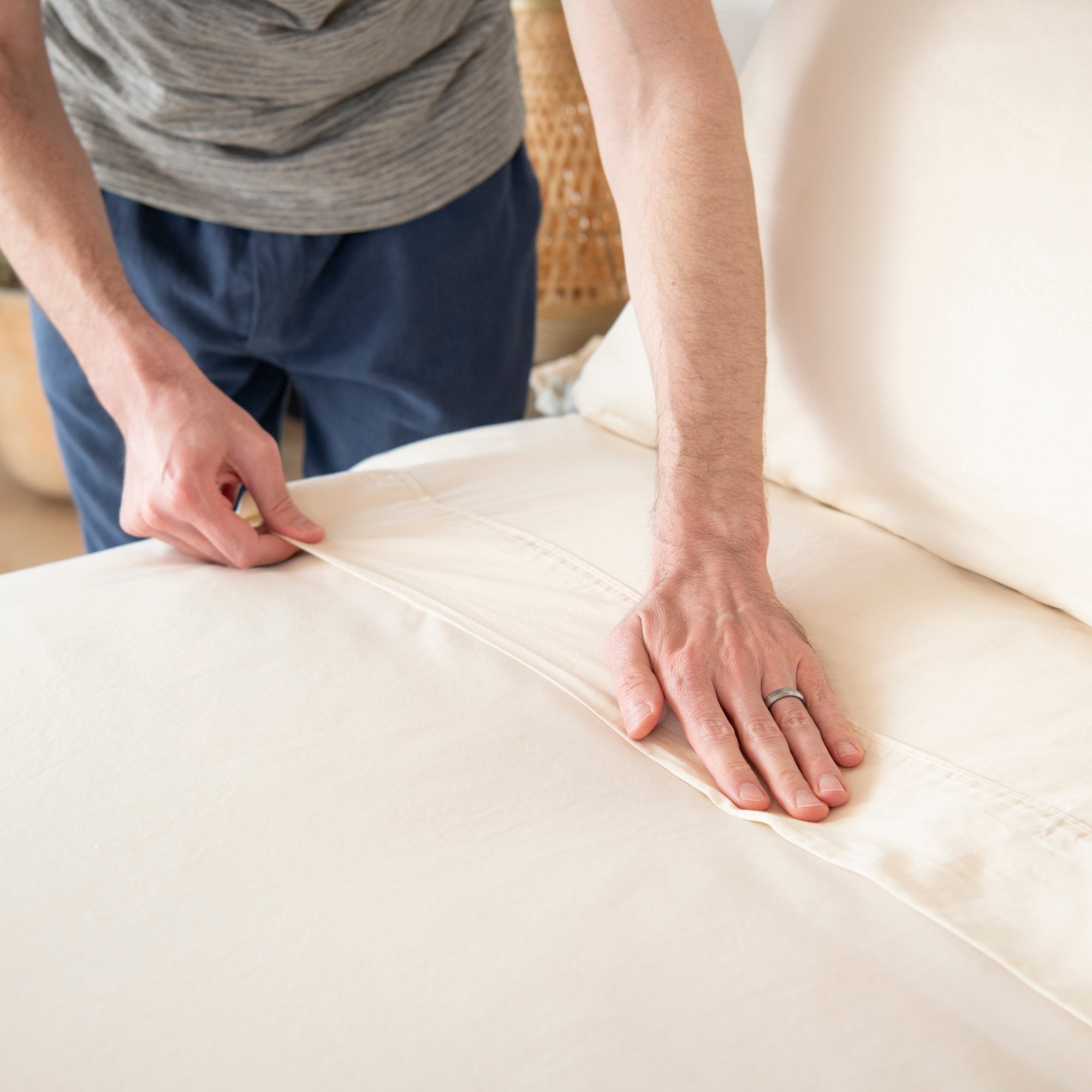
Percale is a type of plain weave with a simple crisscross pattern, one thread over, one thread under. This method creates a matte finish and a crisp, cool feel. Percale sheets are often compared to a freshly ironed shirt — smooth and breathable.
Percale sheets are highly breathable due to this plain weave that allows for better air circulation, making them ideal for hot sleepers or sleepers living in warmer climates. They are also known for their durability, as the tight weave makes them strong and long-lasting. And, that distinctly light and crisp texture of percale sheets gets softer with each wash without losing their cool, refreshing feel.
What Is Sateen?
Sateen, on the other hand, is a type of weave where several threads go over one thread, creating a pattern that gives the fabric a silky, smooth surface with a slight sheen. This weave results in a denser, warmer fabric.
Sateen sheets provide a luxurious feel with their silky, smooth texture and lustrous finish. This gives a sense of opulence to your bedding. Sateen sheets are heavier and more insulating, making them a great choice for cooler climates or for those who tend to get cold at night. They drape well over the body, giving a cozy, snug feeling that many find comforting.
4 Additional Considerations for Sheet Shoppers
When choosing between percale and sateen, there are additional factors to consider that can impact your overall satisfaction and sleep quality.

Here are four to keep in mind.
1. Thread Count
Thread count refers to the number of threads woven into one square inch of fabric. While a higher thread count often indicates a softer sheet, it's not the only factor that matters.
Percale sheets typically have a thread count range of 200-400. Higher thread counts can make percale sheets softer and more durable while lower thread counts are more breathable. Our organic cotton percale sheets have a thread count of 300 to strike the perfect balance of durability and breathability for your best comfort.
Sateen sheets usually have a thread count of 300-500. The higher thread count enhances the smooth, silky feel and adds to the sheet’s warmth and drape, but lower thread counts are more durable and breathable. Again, Naturepedic strikes the perfect balance with a thread count of 400 for softness that won’t pill, shed, or make you sweat.
2. Staple
Staple refers to the length of the cotton fibers used in the fabric. Longer staples are generally superior because they produce smoother, stronger, and more durable threads.
Percale sheets often use long-staple cotton (such as Egyptian or Pima cotton), which contributes to their smoothness and longevity. Sateen sheets also benefit from long-staple cotton, which enhances the fabric's softness and strength, giving sateen sheets their characteristic luxurious feel.
Naturepedic’s cotton sateen and cotton percale sheets are made from premium, long-staple, GOTS-certified organic cotton. We also offer sateen sheets in Supima cotton, a rare, extra-long-staple cotton grown only in North America. Basically, you can trust that when you choose Naturepedic you’re choosing the best of the best.
3. Ply
Ply indicates the number of threads twisted together to make a single thread. Single-ply sheets use one thread, while multi-ply sheets use multiple threads twisted together.
Percale sheets commonly use single-ply threads, providing a lighter, more breathable fabric. Sateen sheets can use single or multi-ply threads. Single-ply threads give a lighter, softer sheet, while multi-ply threads increase the sheet's weight and warmth.
We use single-ply threads for our cotton percale and classic cotton sateen sheets to offer superior softness that won’t make you overheat. (The goal is cozy, not sweaty!) On the other hand, our Supima sateen sheets feature a 300-thread-count weave in a double-ply method to create a 600-thread-count feel for those who prioritize softness.
4. Care
Caring for your sheets properly ensures they last longer and maintain their quality.
Percale sheets are relatively easy to care for and often become softer with each wash without losing their crisp, cool feel. Sateen sheets can require a bit more care to maintain their silky texture. It’s best to wash them on a gentle cycle with mild detergent and avoid high heat in the dryer to preserve their luster and softness.
All Naturepedic sheet sets can be machine washed and dried and will only grow softer and more luxurious with every laundry cycle — because we believe that when it comes to your sleep space, elegance should be effortless.
Bonus Tip: Shop Certified Organic Sheets!
Before you click “add to cart,” here’s one more tip to make your bedding choice the right one, whether it's sateen or percale.

At Naturepedic, we are committed to providing high-quality, certified organic bedding that supports your health and that of the environment. Certified organic sheets, whether percale or sateen, ensure that the cotton used is grown without GOTS-prohibited pesticides and processed without GOTS-prohibited fabric treatments because those chemicals have been proven to be harmful for both human and environmental health.
Beyond health, organic sheets also offer superior comfort and durability — Mother Nature does it best. When you choose certified organic sheets from Naturepedic, you're not only supporting sustainable and ethical practices in the textile industry, but also enhancing your own sleep experience. And you deserve to.
Oh, and one last reminder — it’s not organic unless it’s certified organic. Look for that GOTS logo wherever you shop!
The Bottom Line
When it comes to choosing between percale and sateen sheets, the decision ultimately depends on your personal preferences and sleep needs. If you prefer a cool, crisp feel and live in a warmer climate, percale sheets might be the perfect fit for you. On the other hand, if you enjoy a silky, smooth texture and need extra warmth, sateen sheets could be your ideal choice. Whatever you choose, keep it certified organic and you really can’t go wrong.
Have feedback on our story? Contact us to let us know what you think or visit our about us page to learn more!