



When you think about creating a bedroom that supports sleep, you probably think about choosing a comfortable mattress, the right bedding, cozy lighting, the basics. But there’s another part of the bedroom environment that’s easy to overlook: scent.
The way a room smells can transform the way it feels. A bright citrus scent can make a space fresh and energetic, while softer woody and warm scents feel more at home during the evening hours. Some scents can even help you sleep better.
While there is no universally “sleep-inducing” scent, and bedroom fragrance shouldn’t be treated as a remedy for insomnia or other sleep concerns, scent can be a key player in your wind-down routine, something familiar that you associate with the transition from the activity of the day to the relative quiet of bedtime.
At Fontana Candle Co., we spend a lot of time thinking about how scent shapes a space, as well as what goes into creating that aroma in the first place. Here’s what to know about choosing the best scents for sleep, the bedroom, and the hours leading up to lights out.
Best Scents for Sleep: Key Points
- There is no single best scent for sleep. Lavender, vanilla, cedarwood, sandalwood, chamomile, and bergamot are all popular bedroom fragrances, but personal preference matters most.
- Scent can become part of a wind-down routine through association. Repeatedly using the same fragrance while reading, stretching, or getting ready for bed may help make it feel like a familiar cue that the day is ending.
- Lavender has been studied in relation to sleep, but research findings do not mean every lavender-scented product improves sleep or should be treated as a sleep remedy.
- Choose bedroom fragrance based on scent family, intensity, and how you plan to use it. A softer scent that feels comfortable and familiar may work better than one that simply has a reputation for relaxation.
- Candles can be part of the pre-bedtime ritual, but not sleep itself. Enjoy them while you are awake and winding down, then extinguish them before you become drowsy or get into bed.
Note: This blog may contain links to Naturepedic products and promotional content where relevant to the topic discussed.
What Scents Help You Sleep?
Lavender is probably the scent most closely associated with sleep, but it isn’t your only option. Vanilla, cedarwood, sandalwood, chamomile, and bergamot are also among the most common calming scents for sleep and bedroom use.
They differ significantly in scent profile:
- Lavender is floral and herbal.
- Vanilla is warm and sweet.
- Cedarwood is dry and woody.
- Sandalwood is smooth, warm, and earthy.
- Chamomile is soft, herbal, and slightly floral.
- Bergamot is citrus-forward with floral and herbal notes.
There is no universal best scent for sleep. Preference varies, and a scent that one person finds relaxing may be distracting or unpleasant to someone else.
It’s not just a preference thing, either. Repeated exposure to scents can create associations. If you regularly use the same scent while reading, getting ready for bed, or following your after-work routine, that scent may become associated with that part of the day.
So, what is the best scent for sleep? Start with the one that makes your bedroom feel comfortable, familiar, and restful to you.
What Is the Best Scent for a Restful Bedroom?
Few scents have a stronger connection to bedtime than lavender. You’ll find it in everything from linen sprays and bath products to candles, teas, and nighttime personal care products. Its long-standing cultural association with evening routines is a major part of its appeal.

Lavender essential oil has also been studied in relation to sleep. Recent systematic reviews have found promising associations between lavender use and measures of sleep quality, but researchers also point to important limitations, including differences in study design, methods of exposure, sample size, and how sleep was measured. More research is needed before broad conclusions can be made.
Research involving lavender essential oil does not mean that any product containing lavender can be said to improve sleep. A lavender candle is better understood as a way to bring a familiar, pleasant aroma into your pre-bedtime environment, not as a sleep treatment.
Does Lavender Help You Sleep?
Lavender is one of the most extensively studied scents in connection with sleep, and some research has reported improvements in sleep-related measures. However, there isn’t enough consistent evidence to say that smelling lavender will make everyone sleep better.
The simpler takeaway is this: if you enjoy lavender and already associate it with relaxing, it can be a good scent choice for your evening routine. On the other hand, if lavender isn’t your thing, there’s no reason to force it. Personal preference is an important part of choosing a bedroom scent.
What Scents Pair Well With Lavender for Bedtime?
Lavender is especially versatile because it can move in several directions depending on what you pair with it.
- Lavender and vanilla creates a softer, warmer combination. Vanilla rounds out lavender’s sharper herbal qualities without completely covering them.
- Lavender and cedarwood shifts the blend in a woodier direction. Cedarwood can add dryness and depth, making the overall aroma feel less floral.
- Lavender and bergamot feels fresher. Bergamot’s citrus character can brighten a lavender blend while still allowing the floral and herbal notes to come through.
There’s no formula for the perfect sleep scent blend. Think instead about balance: a bedroom scent should be noticeable enough to enjoy without dominating the room.
5 More of the Best Scents for Sleep
There’s no definitive ranking of the best scents for sleep. But certain scent families lend themselves particularly well to bedrooms because they tend to be softer, warmer, or less stimulating than some of their brighter counterparts.

Here are a few of the most popular.
1. Vanilla
Vanilla often gets categorized simply as a sweet scent, but its aroma can be much more nuanced. Depending on the blend, vanilla may smell creamy, warm, woody, or slightly spicy.
It’s also extremely familiar. For many people, vanilla is connected with food, home, and other comforting experiences. Again, that doesn’t make vanilla a sleep aid, but it can make a bedroom feel cozy and inviting.
2. Cedarwood
For people who don’t gravitate toward floral scents, cedarwood is a natural place to start. Its aroma is dry, woody, and slightly resinous.
Rather than adding sweetness, cedarwood often gives an aromatic blend structure and depth. It also pairs well with floral, herbal, citrus, and evergreen notes, a versatility that makes it particularly useful for the bedroom.
3. Sandalwood
Sandalwood belongs to the woody scent family, but it has a softer character than cedarwood. It’s generally described as warm, creamy, and earthy.
Sandalwood is a common base note in aromatic blends. It can help anchor lighter notes and give a scent more depth without making it feel sharp. So, if you prefer warm scents over florals or citrus, sandalwood-inspired blends may be worth exploring for the bedroom.
4. Chamomile
Chamomile already has a strong cultural connection with the end of the day, thanks largely to chamomile tea. As a scent note, it’s typically soft, herbal, slightly floral, and sometimes subtly fruity.
It’s important not to transfer claims about drinking chamomile tea to simply smelling chamomile. They are different forms of exposure. From a scent perspective, though, chamomile's gentle herbal character works naturally in blends intended to feel soft and understated.
5. Bergamot
Citrus scents are often associated with freshness and energy, but bergamot is a little different. It has a citrus character with floral, slightly bitter, and herbal dimensions. Those qualities make it particularly useful in blends where you want some brightness without the sharper effect of a straightforward lemon or orange scent.
For the bedroom, bergamot often works best as part of a blend, balancing heavier woods, herbs, or florals.
How Do You Choose the Best Bedroom Fragrance?
Search for the “best scent for sleep,” and you’ll find plenty of definitive answers. Choosing a bedroom fragrance is actually much more personal.

Start with a few basic considerations:
- Choose a scent you genuinely like. A scent doesn’t become relaxing simply because it contains lavender or another ingredient associated with bedtime. If you dislike the smell, it probably isn’t the right choice for your bedroom.
- Consider the scent family. Florals such as lavender feel different from warm vanilla, dry cedarwood, or fresh bergamot. Thinking first about whether you prefer floral, woody, herbal, citrus, or warm aromas can narrow your options considerably.
- Keep the intensity in mind. Bedroom fragrance doesn’t need to fill every corner of the house. A subtler scent can add atmosphere without becoming distracting or overwhelming.
- Think about when you use it. Instead of keeping your bedroom scented around the clock, consider introducing a particular scent during your evening routine. That creates a clearer distinction between daytime and bedtime.
Ultimately, the best bedroom scent is one that complements the way you want the room to feel.
What Are the Best Ways to Add Scent to a Bedroom?
Candles are only one way to introduce scent into your evening environment. Essential oil diffusers, room sprays, and other aromatic home products can all create different experiences.
How you introduce scent matters because the method affects its intensity, duration, and distribution throughout a room. Always follow the instructions and safety guidance for the specific product you’re using.
It’s also worth remembering that “natural” does not automatically mean appropriate for every person or household. Essential oils and other aromatic ingredients can be irritating or sensitizing for some people, and households with children or pets may have additional considerations.
More scents aren’t necessarily better, either. Whatever method you prefer, a bedroom scent should complement the room rather than overpower it.
Can Candles Be Part of a Bedtime Routine?
Yes, but there’s an important emphasis on the word “routine.” A scented candle can be part of the period before sleep (while you’re reading, journaling, stretching, folding back the covers, or otherwise winding down from the day). And the act of lighting a candle itself can become a small transition point in your evening.
What a candle should not be is something you leave burning as you become drowsy or fall asleep. Think of candles for sleep as candles for the hours leading up to sleep, rather than candles to use while sleeping.
Make Scent Part of the Ritual, Not the Remedy
The best scents for sleep make the transition to bedtime feel intentional. The exact scent matters less than finding one you enjoy and using it thoughtfully as part of an environment built for winding down.
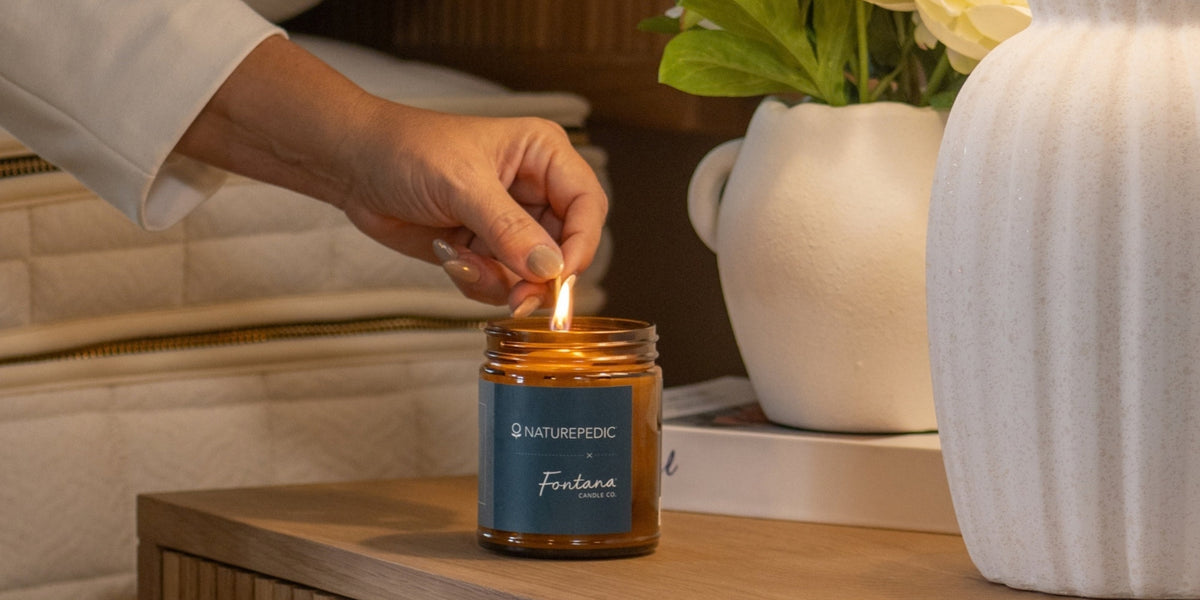
That philosophy is what inspired Pine & Pillow, a candle collaboration from Fontana Candle Co. and Naturepedic. Light it during the quieter part of your evening, enjoy the aroma while you’re awake, and extinguish it before you get into bed.
Have feedback on our story? Contact us to let us know what you think or visit our about us page to learn more!