


New and expecting parents have no shortage of baby gear to consider. Whether you’re working on your own baby registry, shopping for an expecting friend or relative, or just thinking ahead, you may find yourself asking: “Do I really need a bassinet? Should I stick with a crib? What’s the difference, anyway?”
Here’s the direct answer: No, you don’t necessarily need a bassinet. A safety-approved crib, bassinet, portable crib, or play yard can all provide an appropriate infant sleep space when used according to the manufacturer’s instructions. A bassinet’s primary advantages are its smaller footprint, portability, and convenience for room sharing.
Naturepedic is here to help with a quick guide to bassinets, including what they are, their pros and cons, when babies outgrow them, and five important bassinet safety tips.
Bassinet Safety: Key Points
- A bassinet is convenient, but it isn’t required. A safety-approved crib, bassinet, portable crib, or play yard can provide an appropriate infant sleep space when used as directed.
- Use a firm, flat, level, and non-inclined sleep surface and keep the bassinet bare except for its properly fitted mattress or pad and, when permitted, a fitted sheet designed for it.
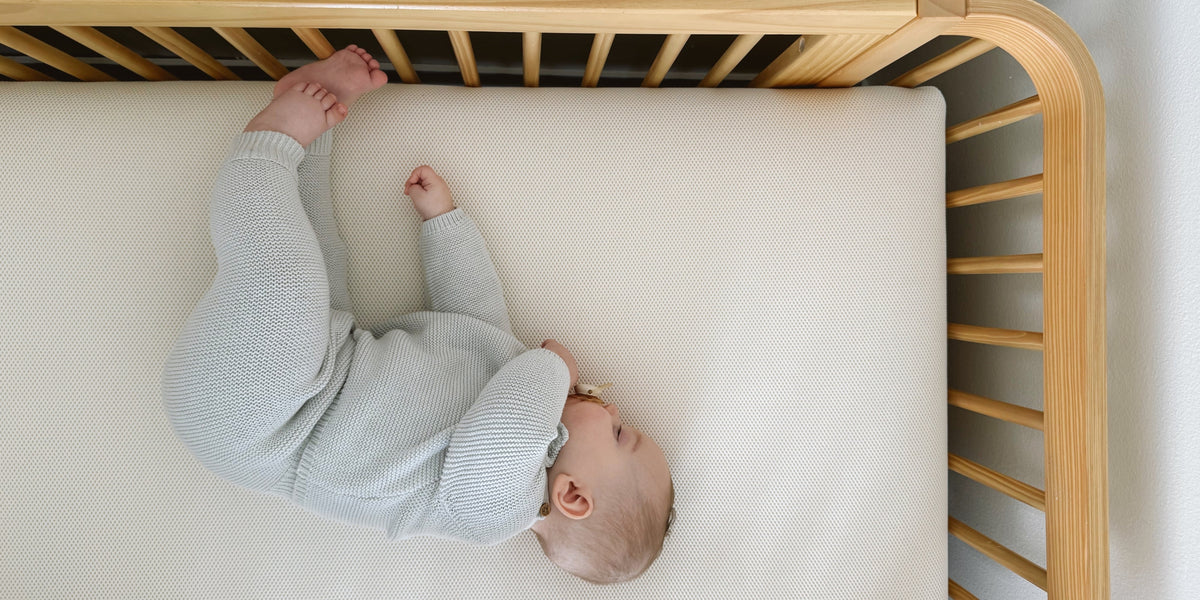
- Always place Baby on their back to sleep for naps and nighttime sleep, and never use wedges or positioners.
- Follow the earliest stop-use limit listed by the manufacturer for weight, height, age, or developmental milestones.
Note: This blog may contain links to Naturepedic products and promotional content where relevant to the topic discussed.
What Is a Bassinet?
Before deciding whether you need a bassinet or a crib, you should probably know the answer to the question, “What is a bassinet, anyway?”

The Consumer Product Safety Commission, or CPSC, defines a bassinet or cradle as a small infant sleep space supported by freestanding legs, a stationary stand, a wheeled base, a rocking base, or another stationary frame.
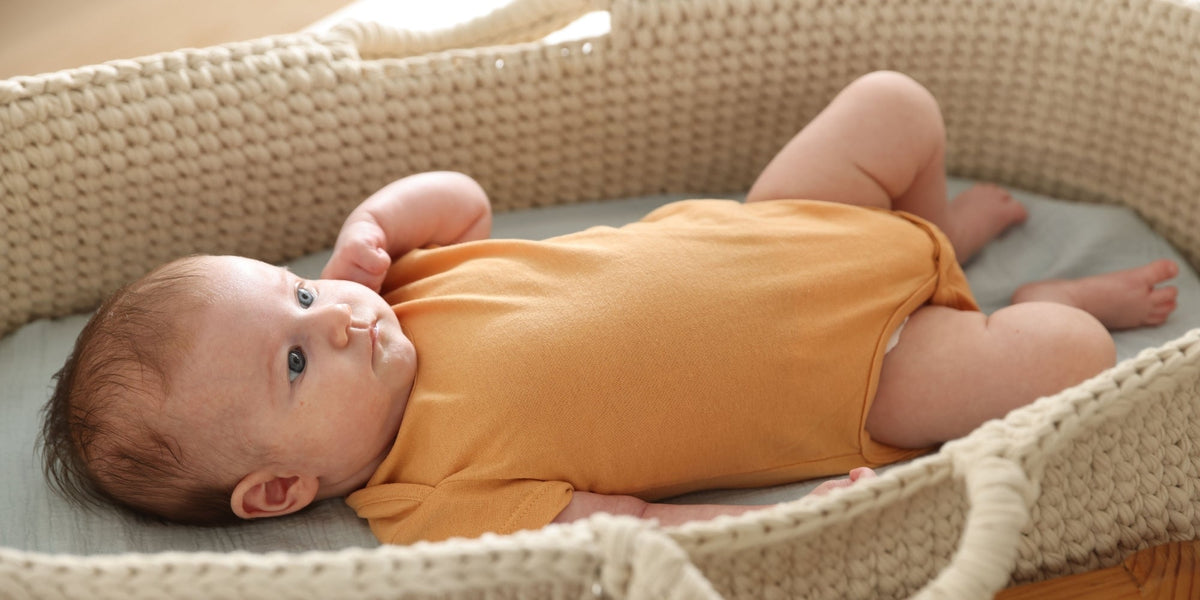
That’s a mouthful! Essentially, a bassinet is a smaller, walled sleep space designed for newborns and young infants.
Many parents place a bassinet next to their own bed during the early months. The American Academy of Pediatrics recommends room sharing — keeping Baby in the same room but on a separate infant sleep surface — for at least the first six months.
Mini Crib vs. Bassinet — They’re Not the Same
While both bassinets and mini cribs can be great options for parents who are limited on space, they are not the same.
Like mini cribs, bassinets are smaller than standard cribs. They are often lighter and easier to move from room to room, and many are designed to fit comfortably next to an adult bed.
Bassinets are also designed for the very beginning of a baby’s life. Weight, height, age, and developmental limits vary by manufacturer and model, so always check the instructions for the exact product you own.
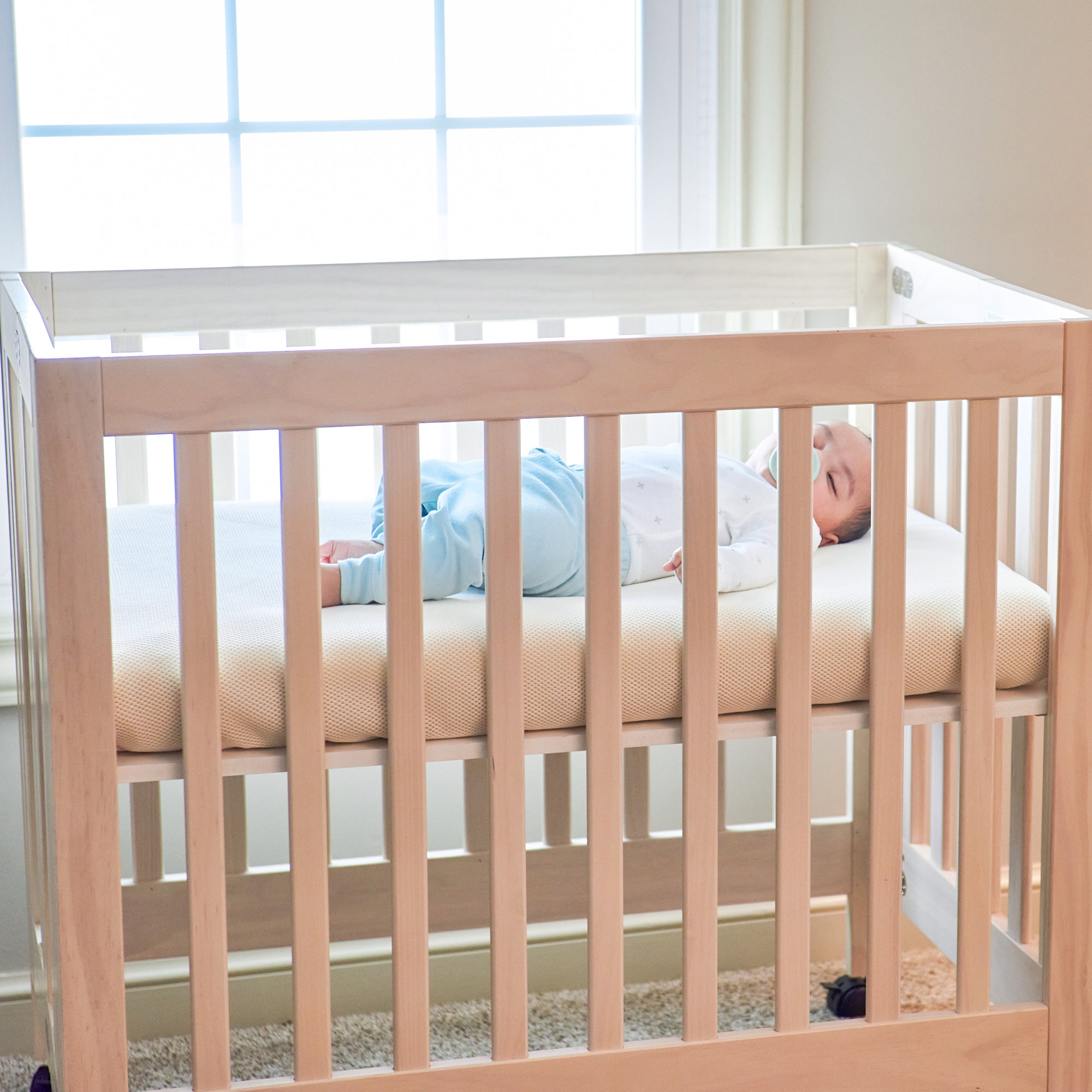
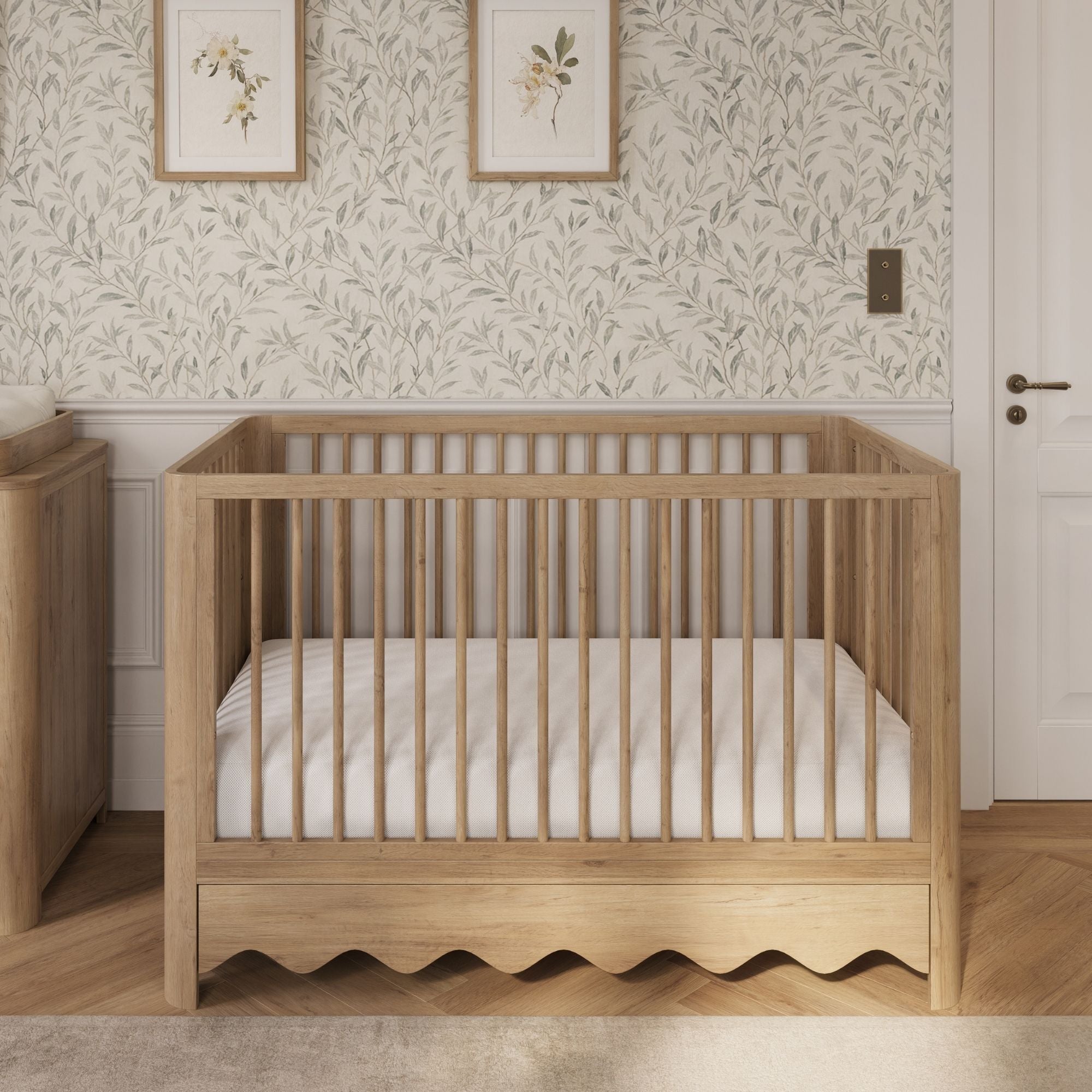
Mini cribs generally offer more room and may be used longer than bassinets. Some also feature adjustable mattress heights similar to traditional cribs. However, mini cribs are usually less portable and may be more difficult to position at your bedside when space is limited.
Pro tip: Whether you purchase a bassinet, mini crib, or traditional crib, check all applicable weight, height, age, and developmental limits before using it.
How Long Can a Baby Sleep in a Bassinet?
There is no single transition date that applies to every bassinet. Always follow the manufacturer’s instructions and stop using the bassinet when Baby reaches the earliest listed weight, height, age, or developmental limit.
As a general product category, bassinets are intended for infants up to approximately 5 months old or until a baby can push up on their hands and knees, whichever happens first. However, individual manufacturers may require parents to discontinue use earlier — for example, when Baby begins showing signs of rolling.
Don’t wait until Baby reaches every limit. When they meet any one of the limits listed for your bassinet, it’s time to transition to an appropriate crib, mini crib, or play yard.
Bassinets: Pros and Cons
As a parent, sleepless nights can feel inevitable. We feel you! Our Naturepedic team includes parents, grandparents, and sleep experts who have been there before.

One of the biggest benefits of a bassinet is proximity. Keeping Baby’s separate sleep space near your bed can make nighttime feeding, comforting, and checking on your little one more convenient.
Portability is another potential benefit. Bassinets are generally lighter and easier to move than standard or mini cribs, although you should only move a bassinet when Baby is not inside unless the manufacturer specifically says otherwise.
Bassinets aren’t for everyone, however. The downside of that smaller space is that Baby will outgrow it relatively quickly. Since you’ll likely need a crib or another larger sleep space within a few months, a bassinet may feel like an unnecessary added expense, especially if space and portability aren’t major concerns for your family.
Every baby and every family is different. A bassinet can be convenient, but it isn’t a requirement.
5 Bassinet Safety Tips
Whichever infant sleep space you choose, safe setup and proper use matter.

Keep these five bassinet safety tips in mind.
1. Use a Firm, Flat, and Level Sleep Surface
Baby should sleep on a firm, flat, level, and non-inclined surface. The mattress or pad should not noticeably indent beneath Baby, and the bassinet should never be propped up or tilted, even if Baby has reflux or a stuffy nose.
Choose a bassinet that meets current CPSC safety standards, assemble it exactly as directed, and use it only for its intended purpose.
2. Bare Is Best
Baby’s sleep space should be free of pillows, blankets, comforters, toys, stuffed animals, positioners, bumpers, and other loose or soft items. This is non-negotiable when it comes to safe sleep!
All you need is the bassinet’s properly fitted mattress or pad and, when permitted by the manufacturer, a fitted sheet designed specifically for it.
A bare bassinet is best.
3. Always Place Baby on Their Back
Adults may have different sleeping preferences. Some of us are back sleepers, some are side sleepers, and some are stomach sleepers.
But for Baby’s safety, always place them on their back for naps and nighttime sleep. Don’t use wedges or positioners to keep Baby in a particular position.
If Baby begins showing a developmental milestone listed as a stop-use condition in your bassinet’s instructions, transition them to a larger, approved infant sleep space.
4. Follow Every Setup and Stop-Use Instruction
Read the manual before assembling or using your bassinet. Make sure every part is properly installed, and inspect the bassinet regularly for loose hardware, damaged fabric, or missing components.
If the bassinet has wheels, lock them whenever it is stationary. Avoid adding aftermarket accessories unless they are specifically approved for your bassinet model.
Before using a secondhand bassinet, confirm that all original parts and instructions are present, and check the CPSC recall database. Never use a recalled or damaged product.
5. Use Only a Properly Fitted, Compatible Mattress or Pad
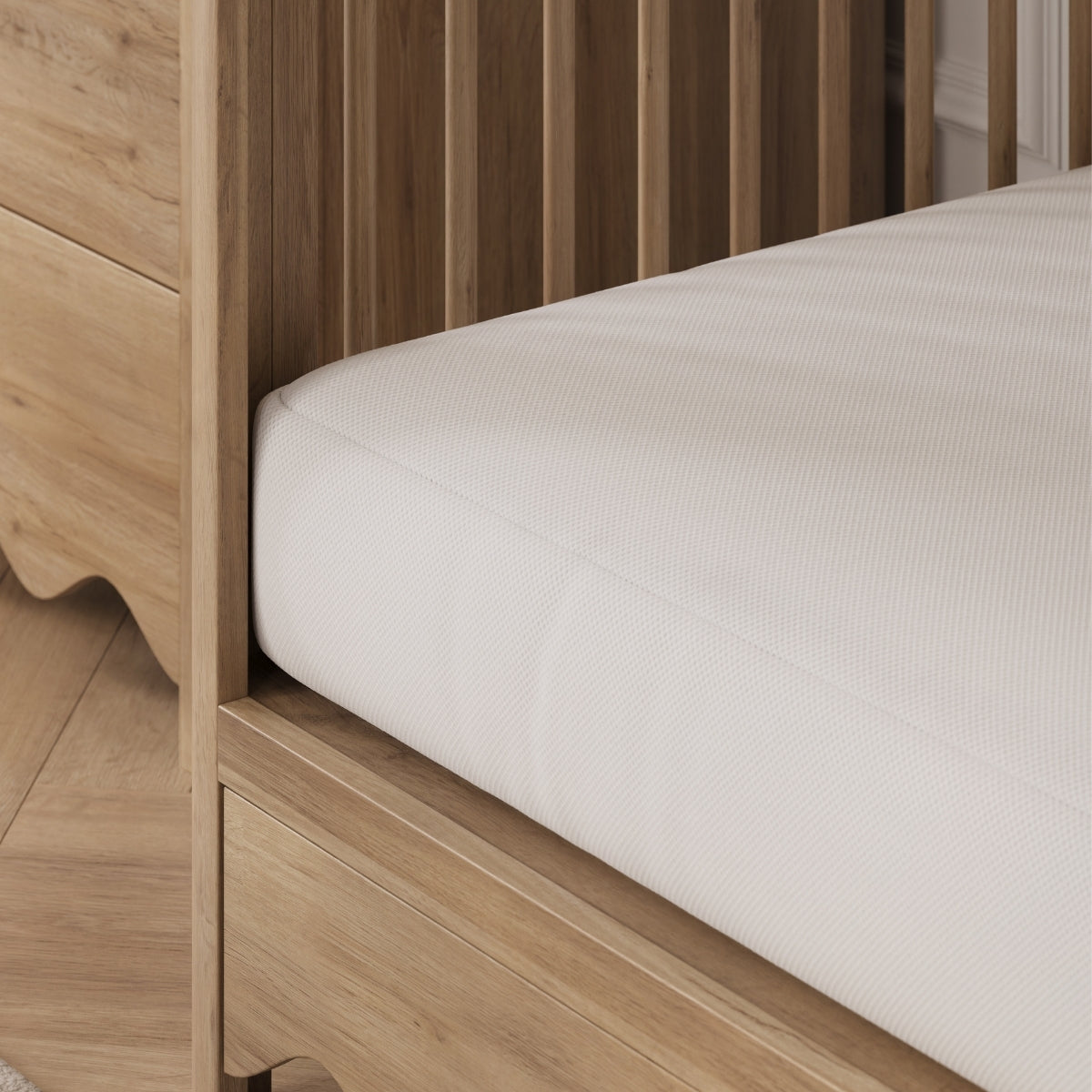
The mattress or pad must fit the bassinet exactly as intended, without gaps around the edges. Never stack one mattress on top of another, add extra padding, or use a generic replacement that was not made for your specific bassinet.
Use the mattress or pad supplied with the bassinet or a replacement specifically designed and approved for the exact model you own.
Once compatibility and proper fit are established, parents may also want to look for a replacement made with certified organic materials when one is available. Organic certification doesn’t replace safe-sleep practices or the manufacturer’s instructions, but it can help families identify products made to established standards for organic materials and processing.
Looking for an Organic Replacement for a HALO Bassinet?
Newborns spend much of each day asleep, so it makes sense that parents think carefully about the materials in their baby’s sleep environment.

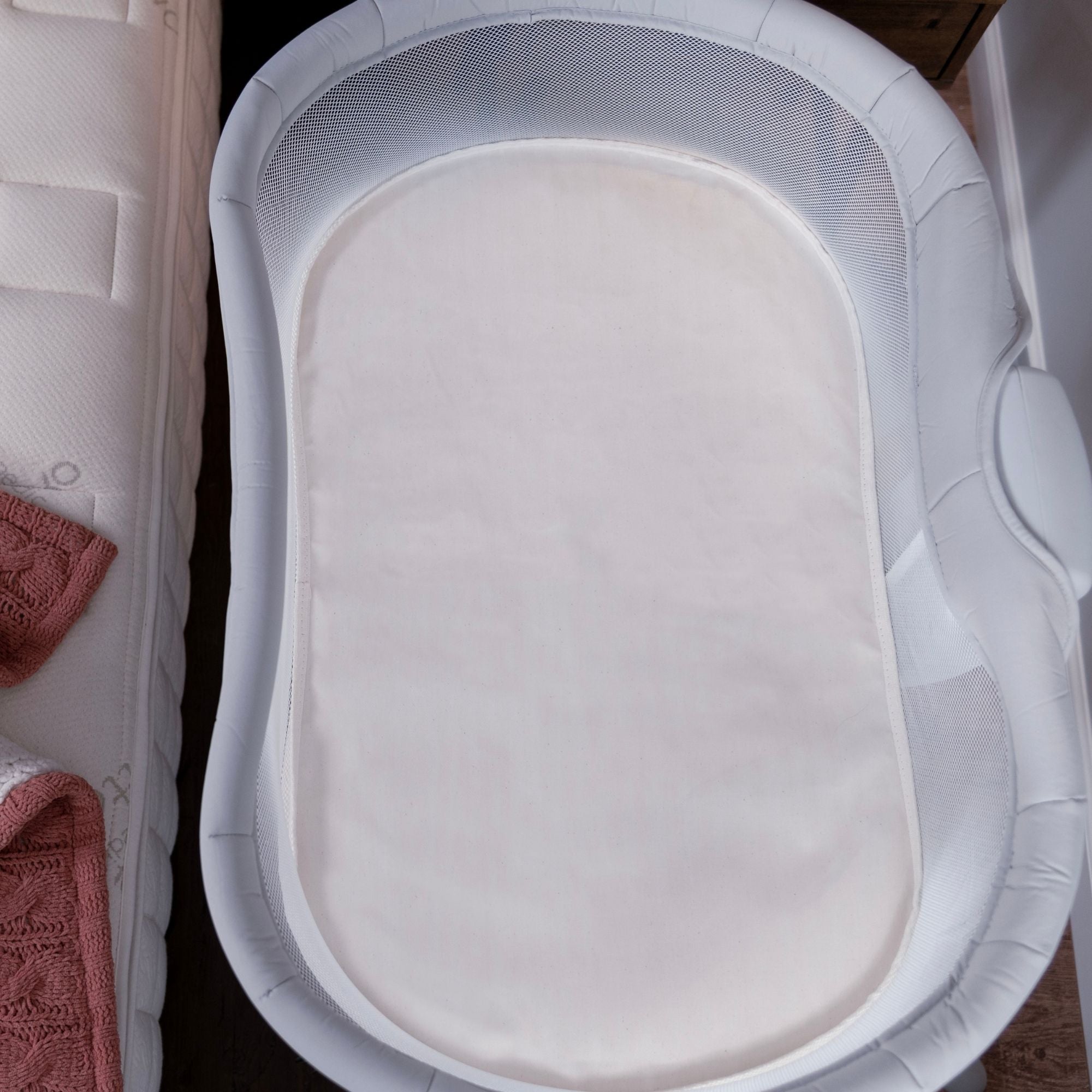
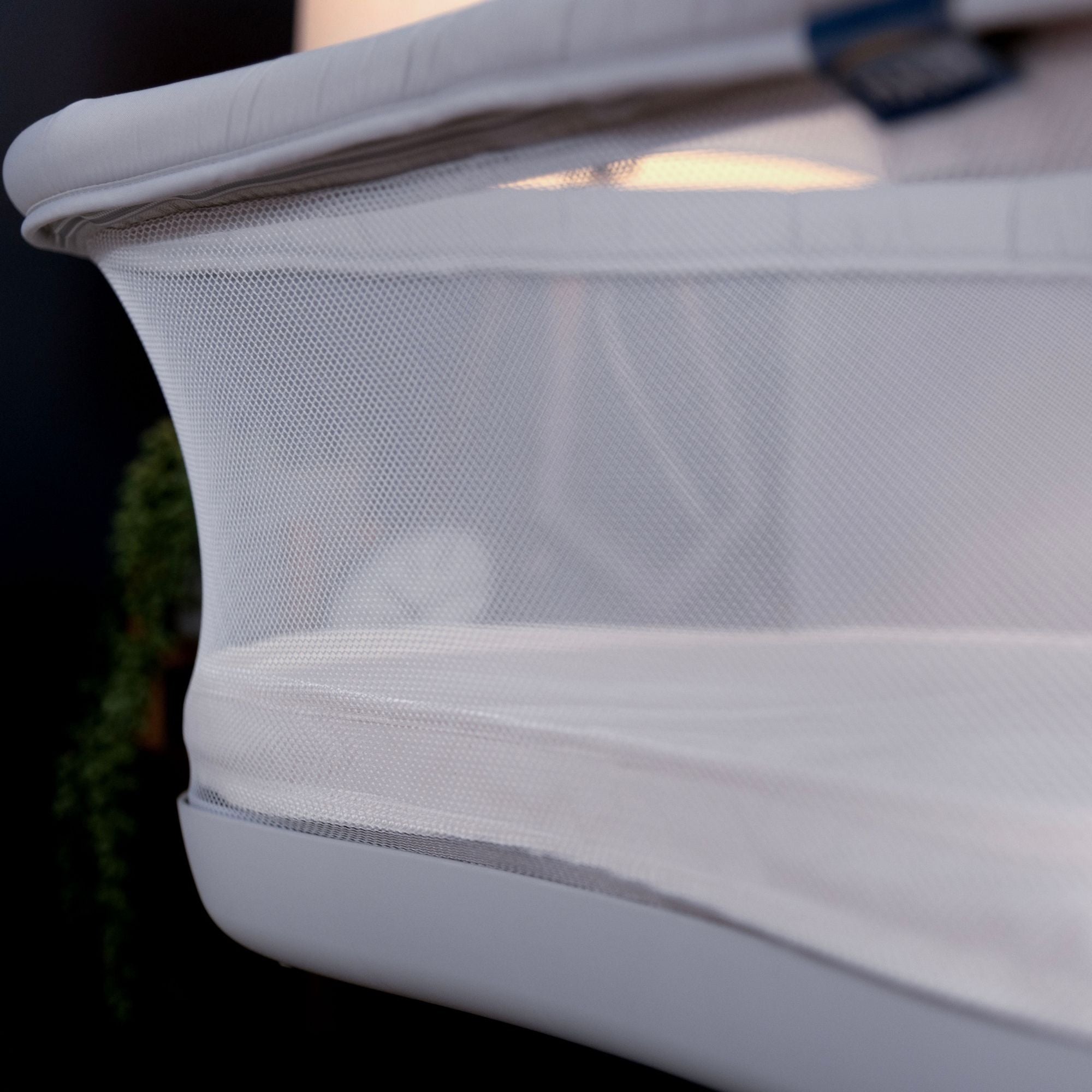
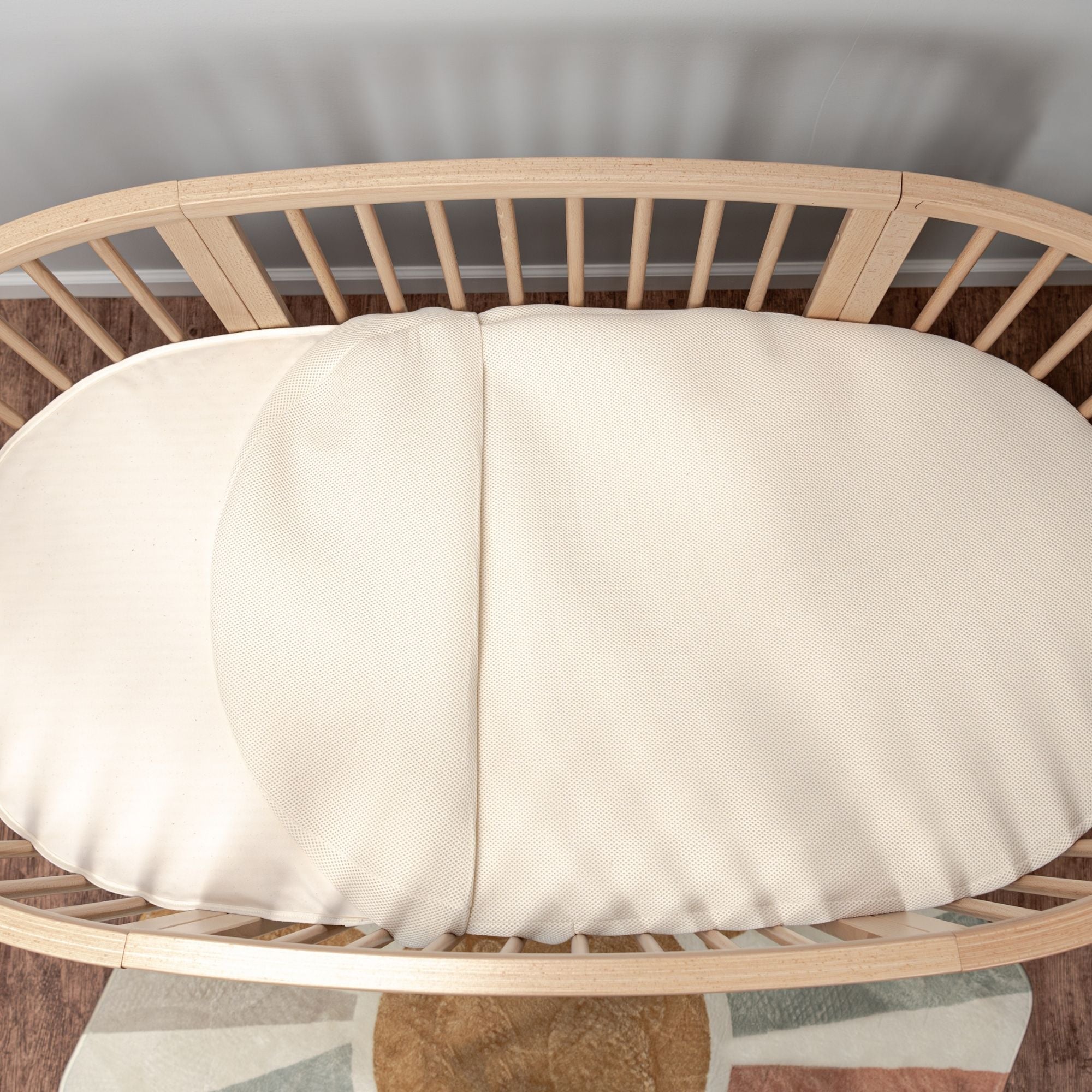
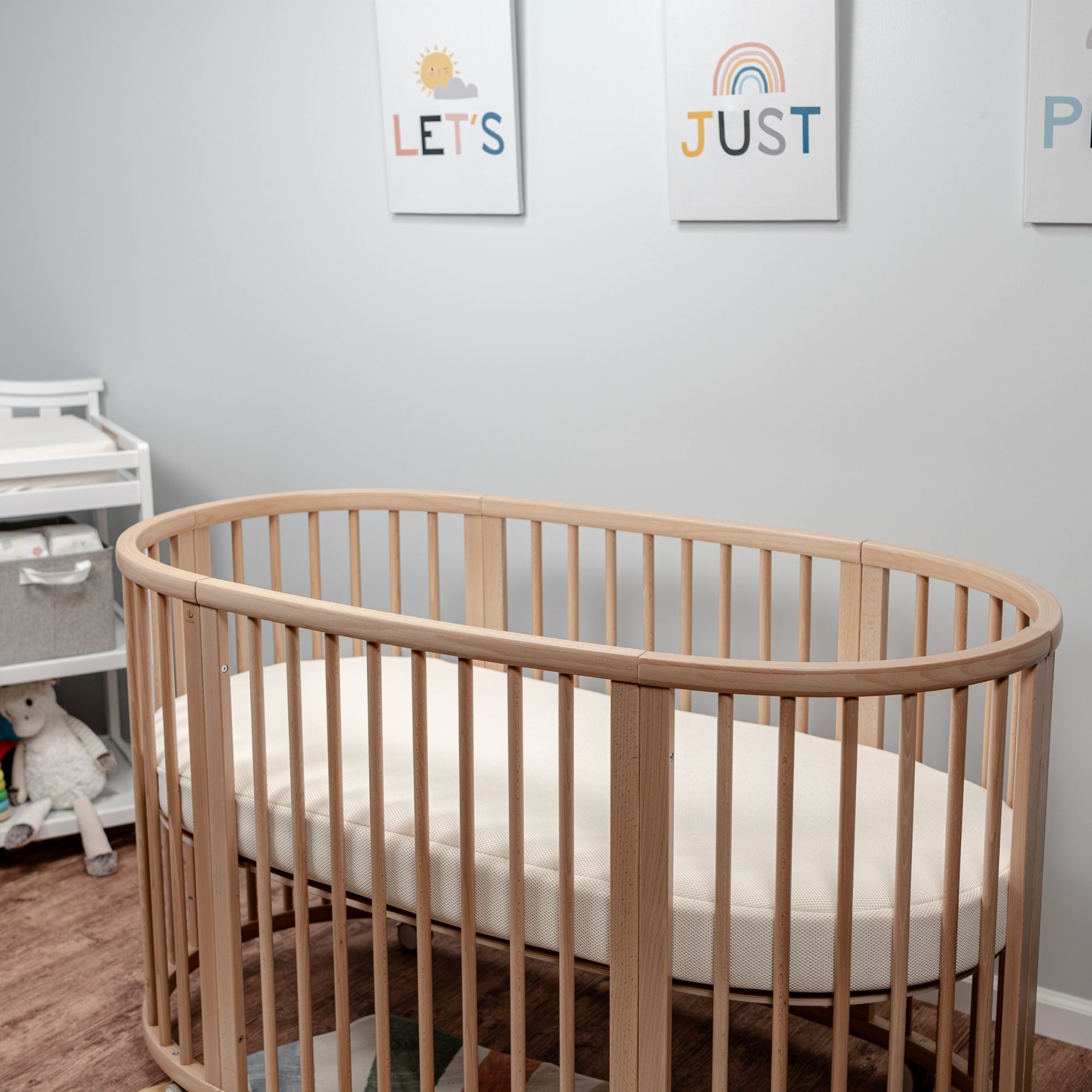
The Naturepedic Organic Breathable Bassinet Mattress was developed in collaboration with HALO specifically for HALO BassiNest™ models. It is not a generic pad intended for use in any bassinet.
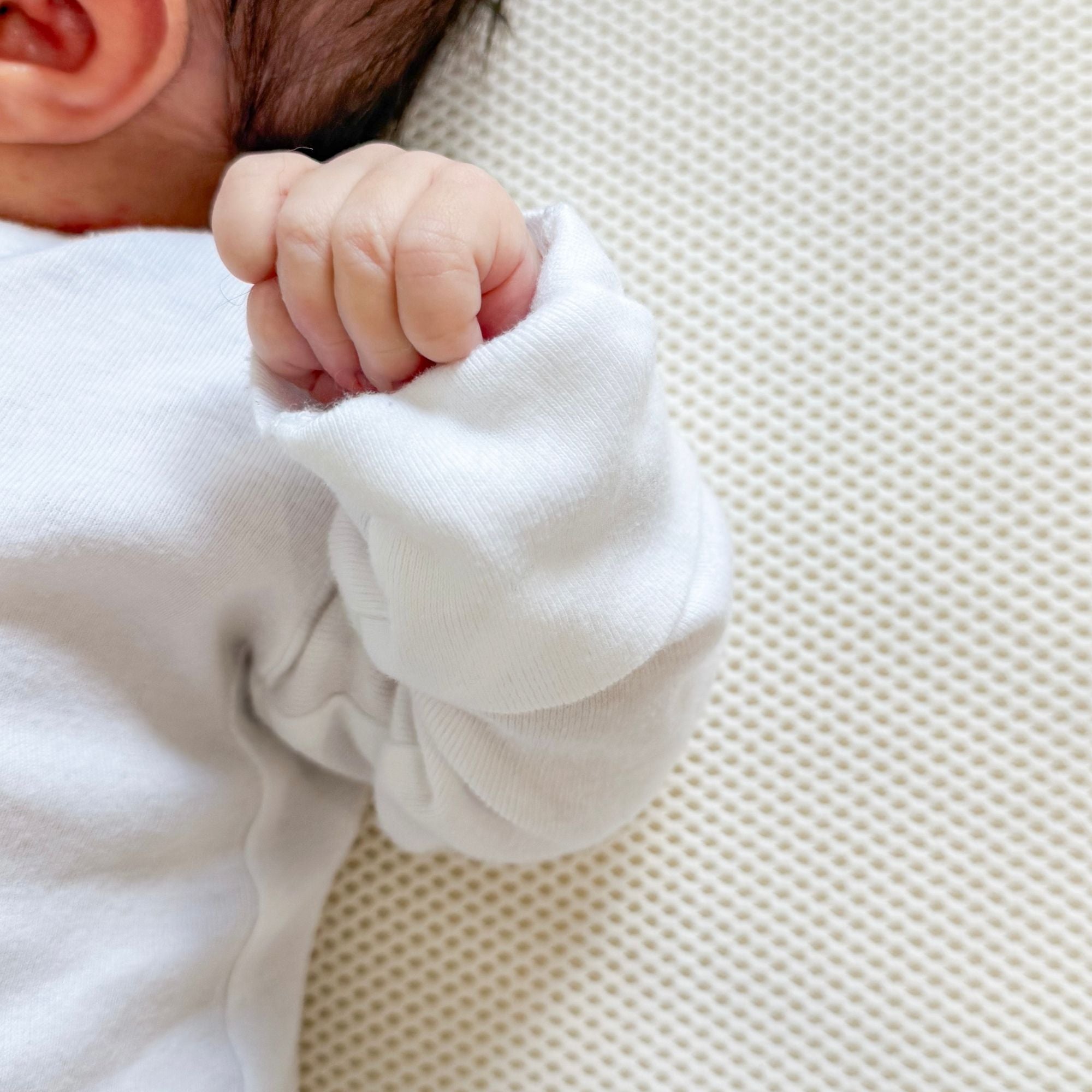
The replacement mattress features certified organic cotton fabric and fill, firm support, and a removable, machine-washable breathable cover with waterproof backing. It is made without polyurethane foam, vinyl/PVC, phthalates, or added flame-retardant chemicals, and it passes applicable flammability standards without chemical flame retardants or additives.
Use it only as a replacement mattress for the compatible HALO bassinet — never place it on top of another mattress or pad.
Have feedback on our story? Contact us to let us know what you think, or visit our about us page to learn more!